
A major research project the MAA conducted with The Midlands Engine (regional government body) highlighted the scale and economic contribution of the region’s aerospace cluster but also pointed to a skewed distribution of national R&D funding across companies.
The first half of the research project focused on accurately measuring the scale of the Midlands aerospace cluster . . . .
Here we summarise the second half . . .
Quantifying aerospace R&D grant funding to Midlands businesses
Aerospace companies around the world are focused on developing new technologies that can reduce the environmental impact of aviation. National governments invest substantial R&D funding to support this effort and grow their aerospace sectors.
The report analysed how much R&D funding was invested by government in Midlands aerospace businesses. It found that:
- Companies and research bodies in the Midlands were awarded £763m in national, European and regional aerospace R&D grants between 2013/14 and 2021/22
- UK national funding has been by far the largest source of support, driven by awards from the UK’s Aerospace Technology Institute (ATI)
- ATI programmes awarded £655m to Midlands organisations between 2013 and 2022 - 41% of all ATI funding and significantly more than any other region
Unbalanced allocation of R&D funding in Midlands aerospace
While this suggests Midlands aerospace has benefited greatly from national R&D grants, the funding is highly concentrated in large companies and universities. Aero-engine maker Rolls-Royce is the main recipient, receiving 75% of all grants, and 91% of all grants awarded to industry.
The report’s new dataset, in contrast, finds that:
- AS9100-accredited 'flying parts' companies which account for one-third of the specialist aerospace jobs in the Midlands have received less than 1% of the R&D grants
- 94% of these companies have not received any R&D grants from the ATI or other parts of the national aerospace R&D ecosystem (map below).
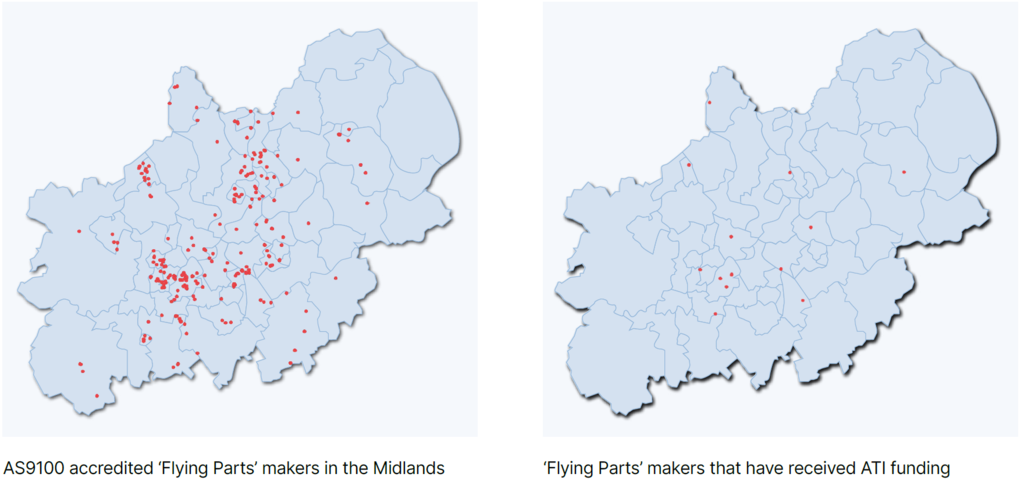
The report asks whether this skewed distribution may suggest a level of untapped innovation potential in the regional aerospace cluster.
The data reveals that government R&D grants are highly concentrated. It will be important to understand why this is the case, whether investing in R&D grants for aerospace supply chain companies might increase the cluster’s regional impact and opportunity to contribute to a more sustainable aviation industry, and if so, how to implement any policy change in collaboration with the ATI, MAA, government and industry itself.
Access the report
To access the full 12 page report (free) click here.
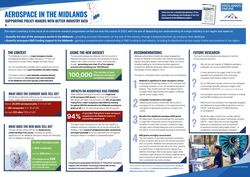
To see the one-page factsheet click on the image below.






.png)